

Color palette is one of the most crucial decisions you make when it comes to bathroom remodeling. After all, colors set the mood, dictate how spacious (or tight) the room looks, and bring your aesthetic together. Getting the colors right is the key to a refreshing, timeless look. On the other hand, mismatched shades could result in an awkward, even cramped and outdated bathroom.
In this guide, we’ll walk you through an easy process of choosing the right color palette for your bathroom. We’ll introduce you to the basics of color psychology, share a few handy tips on how to work with your space, and give you examples of some popular go-to color schemes. After going through this short guide, you’ll be equipped with all the essential principles needed to choose colors that’ll work for your bathroom and make it look good for years to come.
The Role of Color Psychology and Theory in Bathroom Design
Before you run to the paint shop, let’s go over how colors affect our mood, how they change the way we perceive a room, and how to use them to your advantage. In short, a proper understanding of color psychology, color theory, and a few design principles go a long way toward an intentionally-styled bathroom.
Color Psychology in Small Spaces
Colors evoke different feelings in people. Take a look at the typical examples.
- Cool Colors (Blue, Green, Gray): As a rule, cool colors look fresh, clean, and relaxing. Light blue or green shades can also make the bathroom feel more spacious, so they’re ideal for a “spa-like” effect. Gray is a commonly used neutral color due to its current popularity, modern, and high-end vibes.
- Warm Colors (Red, Yellow, Orange): Warm colors, on the other hand, add energy and coziness to the room. However, in the bathroom, such colors are best used in accents (sunny-yellow towels, an artwork). You don’t want to overwhelm the room with too much color, after all.
- Neutrals (White, Beige, Cream): Neutrals are timeless because they’re light, versatile, and make a bathroom feel airier and brighter. Also, lighter neutrals bounce the light, so they work great in smaller bathrooms. As an added bonus, neutrals go with any style of fixtures and accessories.
Applying the 60-30-10 Rule
Once you have your dominant and accent colors, it’s essential to find the right balance between them. The most straightforward approach is to use the 60-30-10 rule:
- 60% of your color palette should be the dominant color, usually the color of the walls. It sets the general tone of the room.
- The 30% goes to the secondary color, used for large items such as vanity cabinets, shower curtain, flooring, etc.
- The last 10% should be used for accent colors, which you can add to smaller items and details (e.g., towels, decor, and hardware).
Key Factors to Consider Before Choosing Your Palette
It’s easy to get lost in the ocean of colors, color schemes, and design ideas. That’s why it’s a good idea to narrow down your choices by considering some factors that will determine which colors will work best for your bathroom.
Bathroom Size and Natural Light
Bathroom size and the amount of natural light it gets should be among the first things you take into account when choosing a color palette. Lighter colors make a small bathroom look more spacious and open, and using different tones of the same color makes it more layered and deep without visually crowding the space.
If your bathroom gets plenty of natural light, you can play around with darker and more vibrant colors. If you like to play it safe, stick to the 60-30-10 rule and always try out paint samples right on your wall at different times of the day (natural light and artificial light can make the same color look completely different).
Existing Fixtures and Finishes
Unless you plan on starting your remodel from the ground up, you’ll have to take existing fixtures and finishes into account when planning your new bathroom.
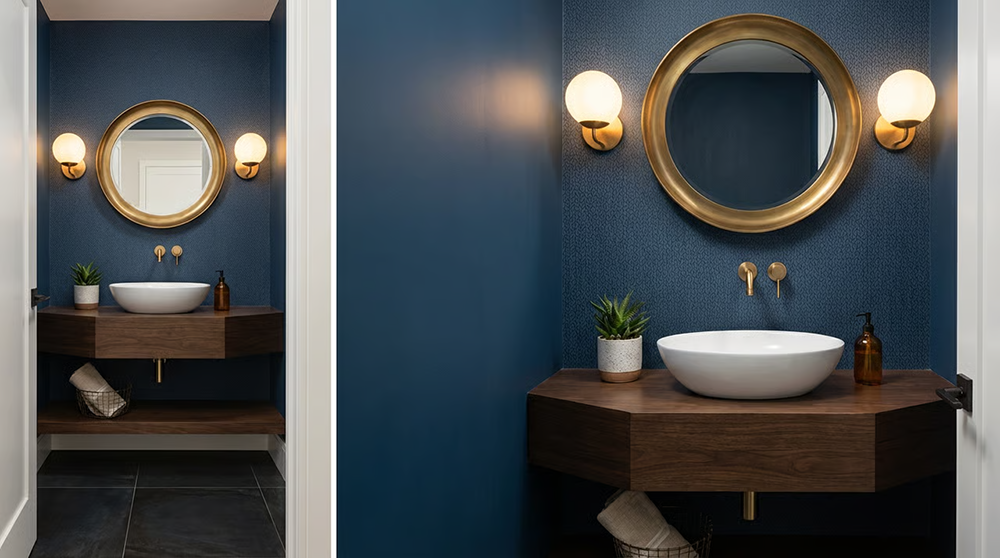
Tiles, countertops, faucets, and light fixtures may not dictate your palette, but they should influence it. If your vanity has a warm wood finish, blue or green walls will complement it nicely and look very balanced and “natural.” On the other hand, if you have a matte black sink or showerheads, playing with gray and white color shades can give your bathroom a high contrast, ultra-modern, designer look. Look at the countertops and tiles and try to see the colors underneath. It will make it easier for you to mix different colors in your palette.
Desired Atmosphere and Overall Home Style
When planning your bathroom remodeling project, you should also have an idea of what sort of atmosphere you’d like to create. Do you want to create a minimalist, spa-inspired sanctuary? A bright and loud powder room? Or would you prefer a more classic and elegant bathroom?
Collecting some reference images or making a mood board can help you determine what appeals to you. Also, it’s usually a good idea to keep your bathroom style consistent with the rest of your home. A contrasting bathroom can still work, but you should aim for a sense of harmony and fluidity between the rooms in your house.
Popular and Timeless Bathroom Color Schemes
To get you started, we’d also like to suggest a few reliable color schemes that work in any bathroom.
Crisp and Serene: White and Blue
White and blue is a no-brainer color combination for a reason. You can pair white walls with any shade of navy, sky blue, or teal for a fresh, spa-like effect. It’s especially good for smaller bathrooms, where white will reflect more light, and blue will add a pop of energy without weighing the space down.
Earthy and Grounded: Green and Wood Tones
Soft green colors (think sage or olive) mixed with real wood elements (vanities, shelves, floors) are an excellent way to bring some nature indoors. It’s a calming, very grounded color palette, which makes it a great choice if you want to make your bathroom feel like a retreat.
Sophisticated and Modern: Grayscale with a Metallic Accent
Choosing the right colors for your bathroom is one of the best things you can do to make your bathroom project a success. With a little help from color psychology and theory, some insights into how to work with your space, and following a couple of basic principles, like the 60-30-10 rule, you’re sure to create a bathroom that looks personalized and well-thought-out. Bathroom palette is not only one of the easiest design decisions but also a critical one – after all, it sets the entire tone of the room and ties your bathroom to the rest of your house.
Need some help with choosing the right bathroom colors or building your bathroom remodel from the ground up? Elite Home Creations is here for you. We serve the Dallas and Fort Worth, Texas area, and we specialize in elegant, practical, and beautiful spaces that match our customers’ taste and needs. Schedule a consultation with us or check out our website for more information at https://elitehomecreationsdfw.com/.